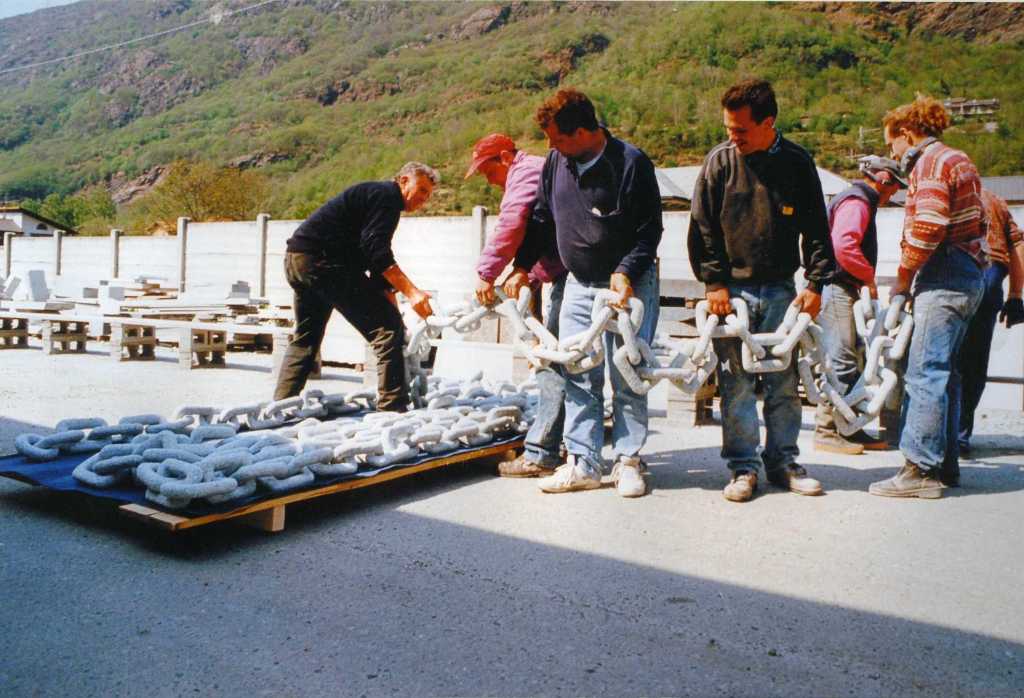
the longest stone chain of the world
la Catena da Record di Lusetti

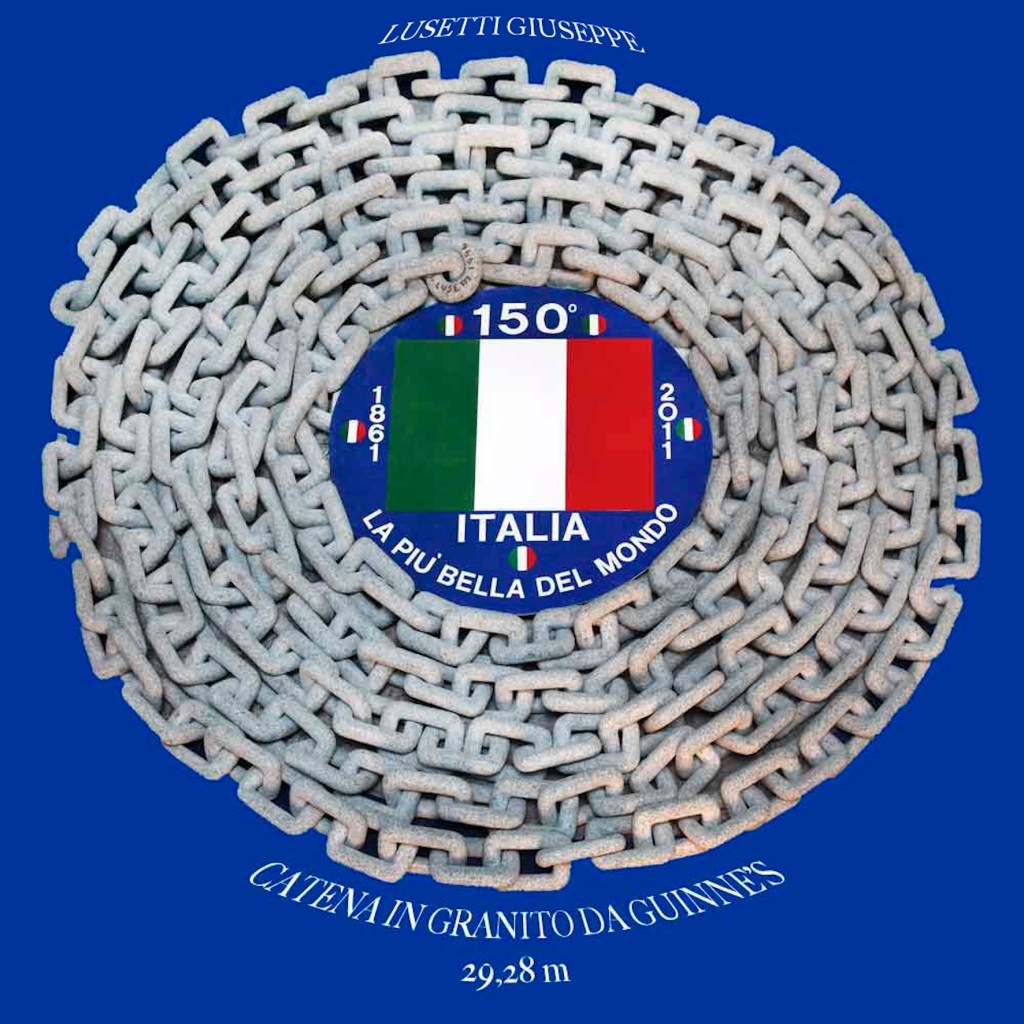
“La catena del Lusetti è da considerarsi un capolavoro; c’è da chiedersi quale sia stata l’occasione della sua ideazione. La risposta è da cercarsi anche nella storia, perché l’artista vive comunque il proprio tempo, e quest’atteggiamento è dichiarato. E’ il caso della catena; esposta a volte dall’artista su sfondo blu con le bandiere al centro, quella americana e italiana e lo sfondo, per ammissione dell’artista, è del colore della bandiera dell’Unione Europea, come simbolo di fratellanza tra i popoli.
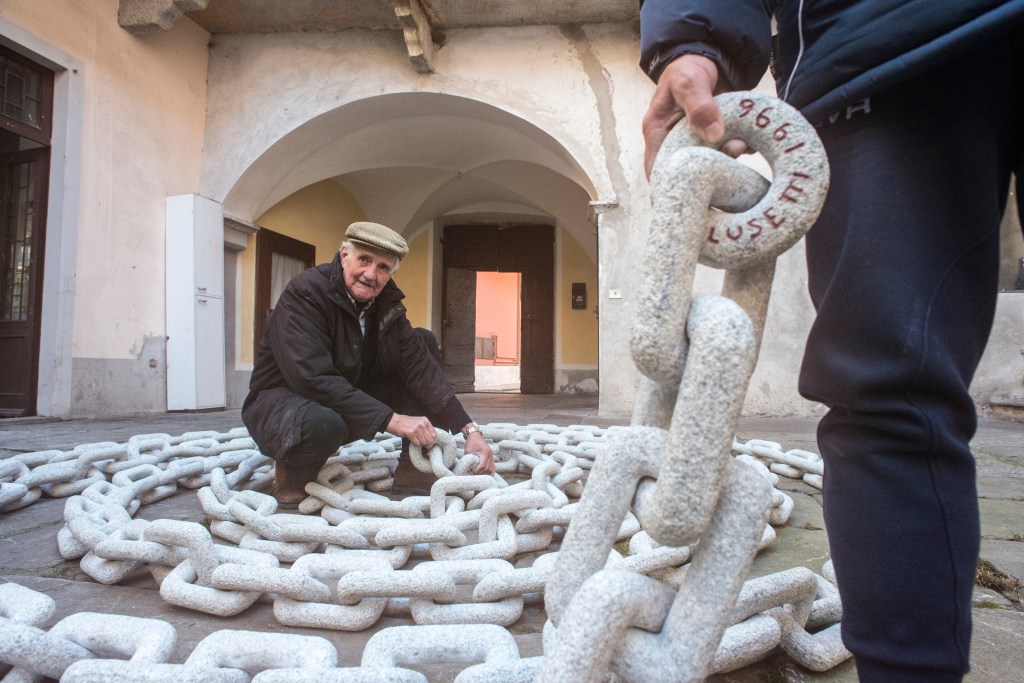
Perché? L’artista ha vissuto da bambino il giorno della Liberazione, il 25 aprile 1945 e fu da sempre grato agli USA per la vittoria sulle forze oscure. Di qui il motivo scatenante della creazione della catena: questi anelli che si tengono l’un l’altro, quasi individui che si tengano per mano, in un materiale destinato all’eternità, ma che rivela anche il suo quotidiano lavoro di scalpellino, insomma la catena, fu suggerita all’artista da una fotografia, datata 12.10.1918, che raffigura il padre del Lusetti prigioniero di guerra, assieme ad altri commilitoni catturati. Il fatto lo colpì molto: tutta quella strage, tutte quelle vite spezzate, e i sopravvissuti a stento; tanto che immaginò una catena in cui tutti gli elementi primari sono legati tra loro, in un’unione inestricabile, affratellati, e non più separabili. Infine, uniti.
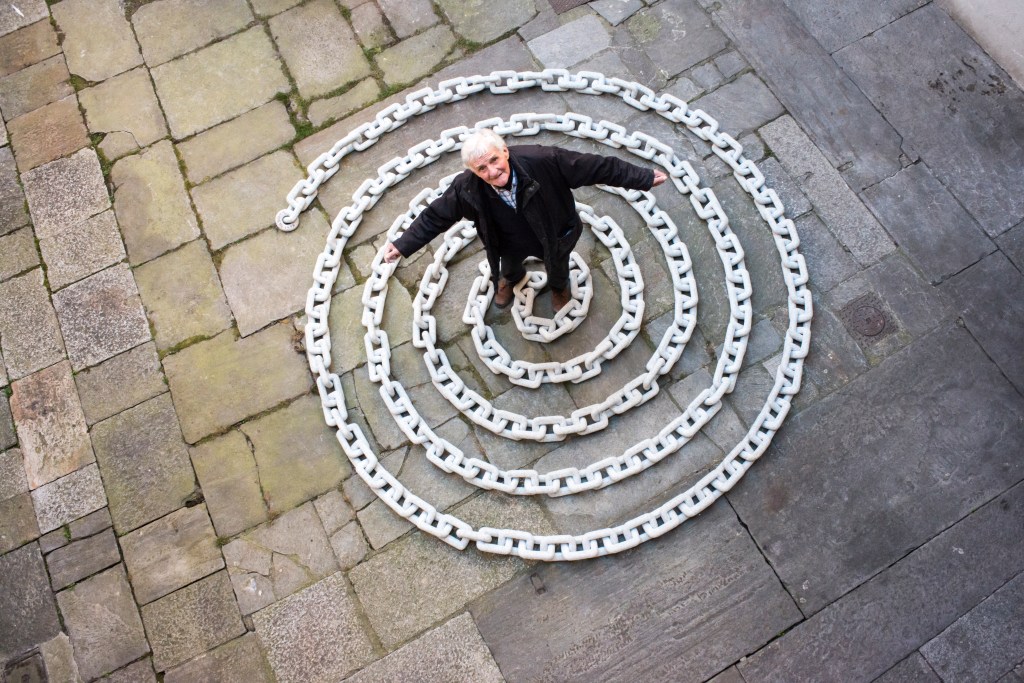
La catena del Lusetti è un esempio non solo di attivismo vitalistico, ma anche della compenetrazione tra abilità artigiana e virtuosismo. Quest ultimo, dà realtà alle cose, come in Paganini o Liszt, generando l’essenza dell’arte. Passaggio obbligato alla visionarietà, come in Alkan, o nei disegni, di Victor Hugo, in cui la visione passa dalla letteratura all’arte con la perizia di cui Lusetti applica la lezione nel sasso incosciente: la catena lega, unisce, rinsalda i concetti racchiusi in rettangolari cornici che, essendo trasparenti, fanno da finestra allo spettatore.”
Claudio Barna
Un’opera che racchiude la cultura di un borgo
“Fantasia e creatività non conoscono confini. Un’opera, se di valore, dapprima stupisce, successivamente costringe all’ammirazione. Sostando dinnanzi alla Catena Lusetti lo stupore diventa incredulità e l’ammirazione emozione.
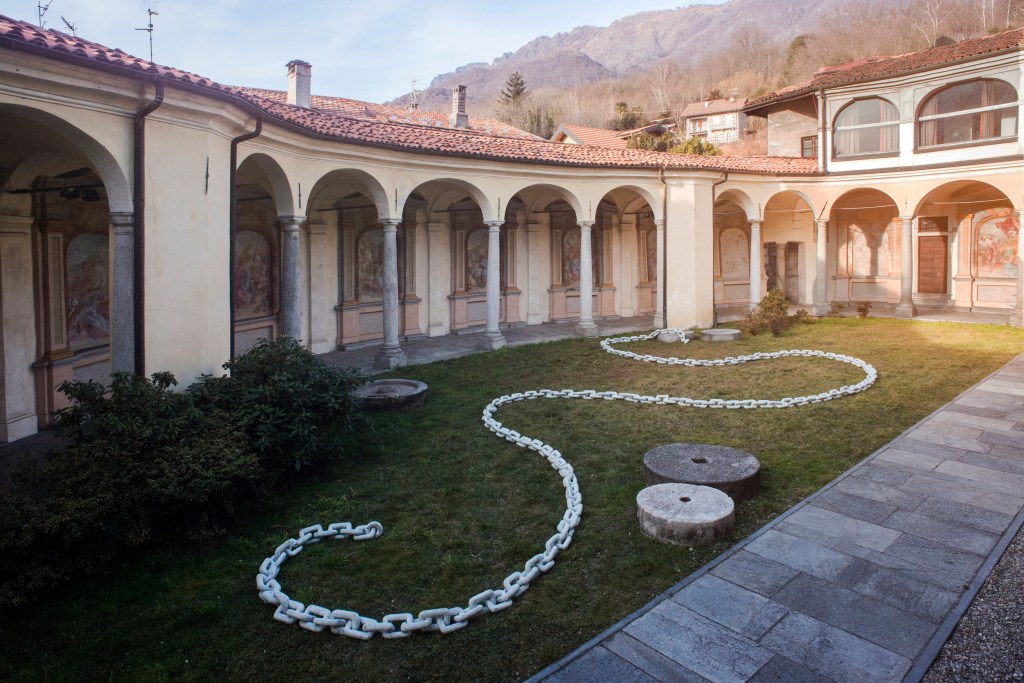
Sforzo d’immaginazione, rara capacità tecnica, desiderio di confronto con se stessi e sfida ad una materia, il granito, “tanto ostica da condurre a perfezione“. Sorprendente e da rimarcare l’aver concepito e realizzato un’opera, così tanto particolare ed impegnativa, senza mediazioni o interventi altrui. Giuseppe Lusetti nella sua Catena ha racchiuso la cultura di una Terra e il lavoro di generazioni di scalpellini. Ha dato splendida rappresentazione del carattere e delle qualità dei vecchi picasass: ostinazione, pazienza, determinazione, inventiva, grande capacità tecnica.
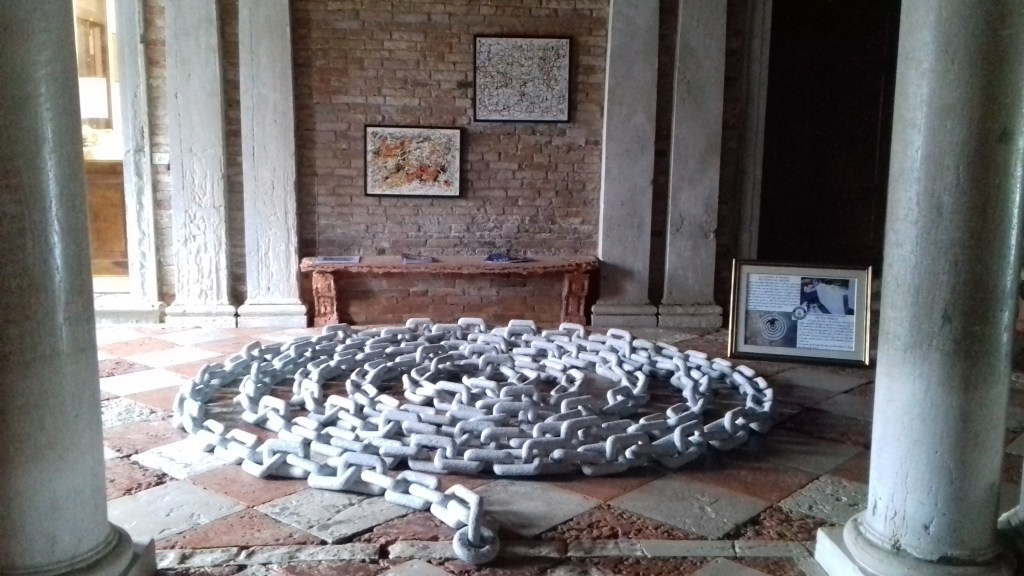
La Catena parla, racconta, suggerisce, trasporta indietro nel tempo: quando il piccolo borgo di Mergozzo “viveva di granito”. L’immagine del blocco che lentamente si trasforma in tanti anelli concatenati, mentre il suo volume rimpicciolisce sino a sparire, è di grande suggestione. Ancor più affascinante immaginare l’artefice al lavoro: una infinita sequenza di fasi impegnative, da compiere con meticolosità, evitando anche i più piccoli errori.
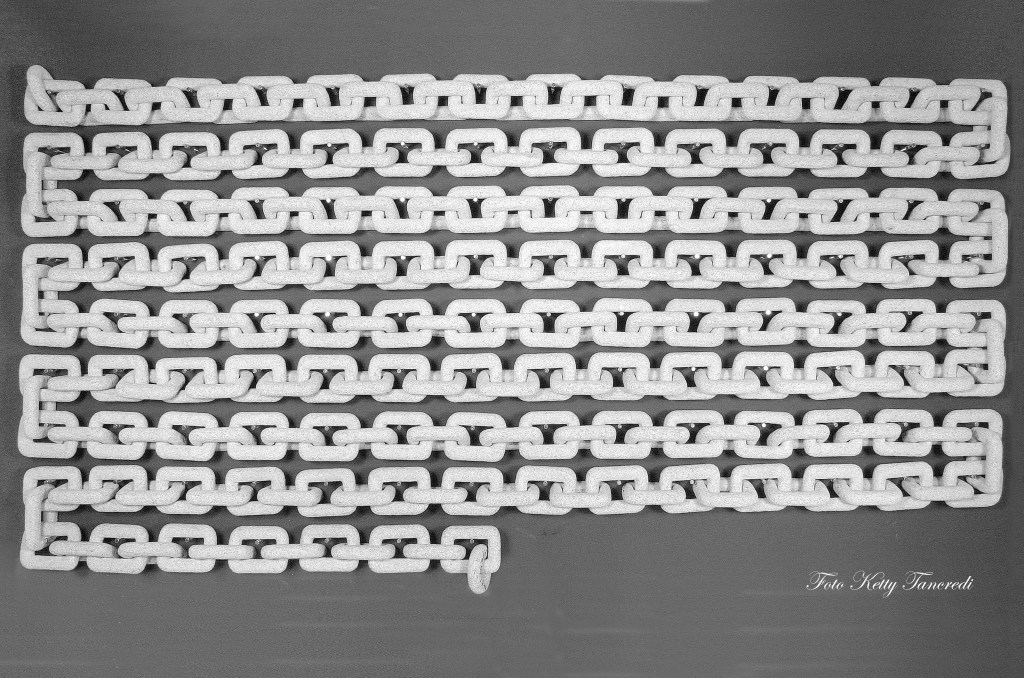
Le maglie scaturiscono dalla grande scaglia di granito come l’acqua sgorga dalla sorgente per essere piccolo rivo che progressivamente si ingrossa e si fa fiume. A maglia si aggiunge maglia: l’utensile, guidato dalle mani abili dell’artefice, scalfisce, penetra, frantuma e modella. La scaglia, frutto del millenario lavorio della natura, si fa forma nuova: l’artefice l’ha mutata in lunga catena.”
Marcello Maria Maffioli
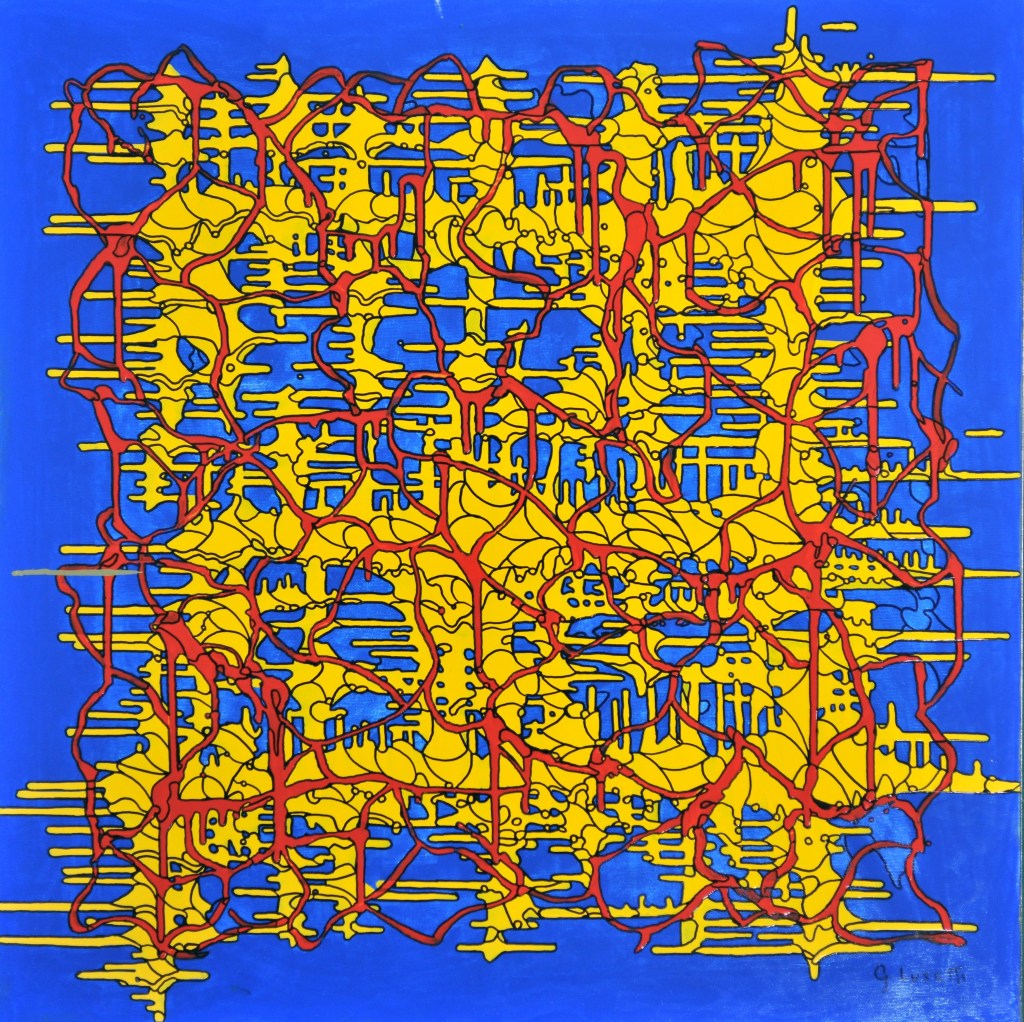

The longest stone chain of the world
Lusetti’s Record Chain is to be considered a masterpiece; we have to ask ourselves “in what occasion did the idea of this creation emerge”. The answer is also to be found in history. The artist, in fact, has sometimes displayed his work on a blue background, to represent the color of the flag of the European Union, and the Italian flag, or the Italian and the American flags together, in the middle, as a symbol of brotherhood between people. Why? The artist remembers the day of liberation, April 25.1945, very well. He was a child when Italy was freed and he always was grateful to the USA for this. This day has been carved in his mind for all his life, as well a photograph, dated 12.10.1918, which represents his father. The latter was prisoner of war, together with other comrades, captured during the First World War. A photo that the artist jealously keeps. “All that massacre, all those broken lives and few survivors”. This was the real trigger for the artist, that made him imagine and then create his chain: many links in a chain that support each other; as individuals holding their hands for eternity. A chain in which all rings are linked, in an inextricable union, in brotherhood, and not separable. Finally, united. Lusetti’s chain is an example not only of vitalistic activism, but also of the interpenetration between the great ability of the craftsman and virtuosity. The latter gives reality to things, as in Paganini or Liszt, generating the essence of art. An obligatory passage to the visionary, as in the work of the pianist Alkan, or in Victor Hugo’s drawings, where the vision passes from literature to art. With such skill, Lusetti applies the lesson to the unconscious stone: the chain binds, unites and strengthens the concepts that are enclosed in rectangular frames which, being transparent inside, look like a window to the spectator.
Claudio Barna
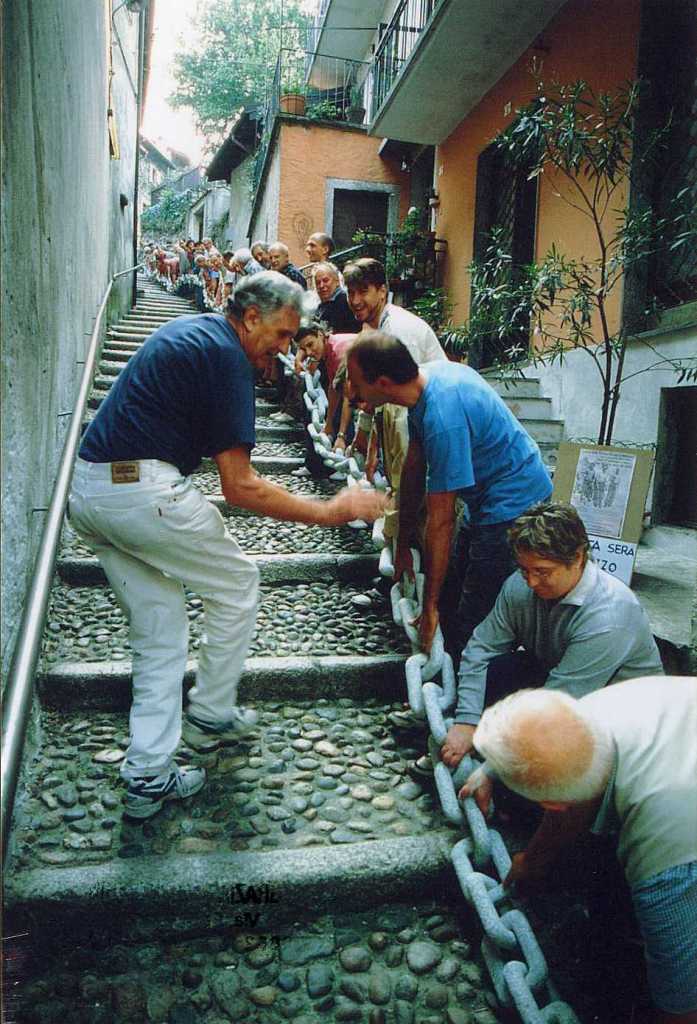
A work of art that contains the culture of a village
Fantasy and creativity have no boundaries. A work of art, if it has any value, amazes at first, then it compels to admire. If one stops in front of Lusetti’s chain, astonishment becomes incredulity and admiration becomes emotion. Effort of imagination, rare technical ability, the desire to confront oneself and challenge the material, granite, “so difficult to work to perfection”. It is surprising how the artist conceived and created a work of art, so particular and demanding, without mediation or intervention by others. In his chain, Giuseppe Lusetti enclosed the culture of a land and the work of generations of stonemasons. He gave a splendid representation of the character and qualities of the old stonemasons: obstinacy, patience, determination, inventiveness, great technical ability. The chain speaks, tells, suggests, transports back in time: when the small village of Mergozzo “lived thanks to granite”. The image of the block that slowly changes into many linked rings, and its volume that becomes smaller until it disappears, is very suggestive. And it is even more fascinating to imagine the artist at work: an infinite sequence of demanding phases, to be performed with meticulousness, avoiding even the smallest mistake. The links spring from the large granite block as the water gushes from the source, to create a small stream that gradually grows and becomes a river. Link by link: the tool, guided by the skilled hands of the artist, scratches, penetrates, crushes and shapes. The block, fruit of the millennial work of nature, takes form: the artist has changed it into a long chain. “
Marcello Maria Maffioli


Die längste Steinkette der Welt
Die Steinkette von Giuseppe Lusetti ist als Meisterwerk zu betrachten; wir müssen uns fragen “in welchem Anlass ist die Idee dieses Kunstwerks entstanden“? Die Antwort ist auch in der Geschichte zu finden. Manchmal hat der Künstler seine Arbeit auf einem blauen Hintergrund, als Symbol für die Farbe der Flagge der Europäischen Union, mit der italienischen Flagge, oder der italienischen und der amerikanischen Flaggen zusammen, in der Mitte ausgestellt, als Symbol der Brüderlichkeit zwischen Menschen. Warum? Der Künstler erinnert sich sehr gut an den Tag der Befreiung, den 25. April 1945. Er war ein Kind als Italien befreit wurde und er ist seitdem den USA dafür dankbar. Dieser Tag ist sein ganzes Leben lang in seinen Erinnerungen geblieben, sowie ein Foto, 12.10.1918 datiert, das sein Vater darstellt. Letzterer war Kriegsgefangener, zusammen mit anderen Kameraden, die auch im ersten Weltkrieg gefangen genommen wurden. Ein Foto, das vom Künstler eifersüchtig aufbewahrt wird. „Das ganze Massaker, die zahlreichen zerbrochenen Leben und wenige Überlebende“. Dies war der wahre Auslöser für den Künstler, so kam er zur Idee, seine Kette zu schaffen: viele Glieder in einer Kette, die sich gegenseitig unterstützen; wie Individuen, die ihre Hände für die Ewigkeit zusammen halten. Eine Kette, in der alle Glieder miteinander in einer untrennbaren Vereinigung verbunden sind, in Brüderlichkeit, endgültig vereint.

Lusettis Kette ist nicht nur ein Beispiel von vitalistischem Aktivismus, sondern auch von der gegenseitigen Durchdringung zwischen der großen Fähigkeit des Handwerkers und der Virtuosität. Die letztere gibt den Dingen Realität, wie in Paganini oder Liszt, die die Essenz der Kunst erzeugen. Eine obligatorische Passage zum Visionär, wie in der Arbeit des Pianisten Alkan oder in Victor Hugos Zeichnungen, wo die Vision von der Literatur zur Kunst übergeht. Mit dieser selben Fähigkeit, wendet Lusetti die Technik auf den unbewussten Stein an: die Kette bindet, vereint und stärkt die enthaltenen Konzepte in rechteckige Rahmen, die innen transparent sind und für den Betrachter wie Fenster aussehen.
Claudio Barna
Ein Kunstwerk, das die Kultur eines Dorfes enthält
Fantasie und Kreativität kennen keine Grenzen. Ein Kunstwerk, wenn es Wert hat, erstaunt zuerst, dann zwingt es zu bewundern. Wenn man vor Lusettis Kette stehen bleibt, geht man vom Staunen zur Ungläubigkeit und von der Bewunderung zur Emotion über. Eine Vorstellungskraft, eine seltene technische Fähigkeit; der Wunsch, sich selbst zu konfrontieren, und das Material Granit, welches “so schwer zur Perfektion verarbeitet sein kann”, herauszufordern. Es ist überraschend, wie der Künstler ein so besonderes und anspruchsvolles Kunstwerk ohne Vermittlung oder Eingriffe anderer konzipiert und geschaffen hat. In seiner Kette hat Lusetti die Kultur eines Landes und die Arbeit von Generationen von Steinmetzen eingeschlossen. Er hat eine großartige Darstellung des Charakters und der Eigenschaften der alten Steinmetzen gegeben: Hartnäckigkeit, Geduld, Entschlossenheit, Erfindungsreichtum, große technische Fähigkeiten.
Die Kette spricht, erzählt, schlägt vor, sie transportiert in die Zeit zurück: als das kleine Dorf von Mergozzo “dank dem Granit lebte”. Das Bild eines Steinblocks, das sich langsam in viele
verknüpfte Glieder verwandelt, und das Volumen, welches immer kleiner wird, bis es verschwindet, ist grandios und stimmungsvoll. Es ist noch faszinierender, sich den Künstler bei der Arbeit vorzustellen: eine unendliche Folge von anspruchsvollen Phasen, die genau durchgeführt werden müssen, wo auch nur die kleinsten Fehler zu vermeiden sind. Die Glieder entspringen aus dem großen Granitblock, wie das Wasser aus der Quelle sprudelt und einen kleinen Bach formt, der langsam zu einem Fluss wird. Glied nach Glied: das Werkzeug, von den geschickten Händen des Künstlers geführt, kratzt, dringt ein, zerkleinert und modelliert. Der Block, Frucht des tausendjährigen Werkes der Natur, nimmt Gestalt an: „Der Künstler hat ihn in eine lange Kette verwandelt.”
Marcello Maria Maffioli
Contatti
CONTACTS / KONTAKTE
Via Sempione 5, 28802 Mergozzo, (VB)
+39 328 083 9637
lusetti.artista@gmail.com
Invia un messaggio


Copyright Giuseppe Lusetti 2018 – Tutti i diritti riservati
 Giuseppe Lusetti